
For the side hustle you keep meaning to take seriously
Is your side hustle a business? Know in 12 weeks.
Your role may not be here in two years. Before you bet your savings on what you do after hours, test it with real customers and decide with evidence, not fear.
A fair question
If your paycheck stopped in 90 days, what would you do?
For a lot of people, the honest answer is "start applying and hope." The side hustle sits on the shelf as a maybe. It never gets a real test, because testing it feels like a risk and quitting for it feels like a bigger one.
There is a third option. Give the idea 12 weeks of structured, honest testing with real buyers, while you still have options.
In 12 weeks you will know
- Whether strangers will pay for it, not just friends
- What they will pay, and what the business looks like at that price
- Which customer and which channel work best
- Whether to go, pivot or stop
Which one are you?
Four starting points. One question to answer.
Wherever you are, the 12 weeks are built around the same question: is there a business here?
Just laid off
You have severance, time and a hustle you never had space for.
Spend the runway on evidence, not guesses.
Watching the writing on the wall
Restructures, AI, a shrinking team. You can feel your role getting smaller.
Build your plan B while you still have a salary.
Earning a little on the side
A few clients, some sales, a growing sense that it could be more.
Find out if it scales or if it is a good hobby.
Sitting on an idea
You know the problem well from years in the field. You have never tested it.
Put it in front of buyers before you build anything.
The decision
Two ways to decide badly. One way to decide well.
Quit and hope
Leave on conviction. Spend months building before anyone says yes.
Risk: your savings, on an untested bet.
Keep it a someday project
Nights and weekends, no deadline, no pass line. The idea never gets an answer.
Risk: years go by and nothing is decided.
Test it, then decide
Run structured experiments with real customers, with a pass line and a drop-dead date on each. At week 12 you hold the evidence and make the call, with two founders who have made it before.
Cost: $3,000 and 12 weeks, whichever way it goes.
Your head start
Your career was not wasted. It is your unfair advantage.
Years inside real companies taught you what most first-time founders never learn. Find your background. The program covers the rest.
You can build it.
We find out who will pay for it.
You know what users need.
We prove they will buy it.
You can tell the story.
We test which story sells.
You can close.
We find the offer worth closing.
You know how teams run.
We find the product and the market.
The 12 weeks
Three weeks to get clear. Eight weeks in the market. One week to decide.
Are you the right person, and is it the right idea?
Map what drives you, write an investor-ready business case, and set the values that filter every yes and no.
Let customers answer
Rank your assumptions by risk, test the riskiest first, and turn every customer conversation into evidence.
Make the call
Review the evidence against the pass lines you set in advance. Then choose with your eyes open.
At week 12, every outcome is useful.
Go
Customers said yes. You have signal, a plan, and the confidence to take it further.
Pivot
The need is real but the offer was off. You know exactly what to change.
Stop
Not this one. You stopped at a fixed cost, with your savings and your next move intact.
How it runs
You are not doing this alone, and not for long.
A small cohort of 5–7 founders, a weekly private hour, and a system that keeps the experiments honest.
Your coaches
Founders who have done it, not a curriculum on autopilot.
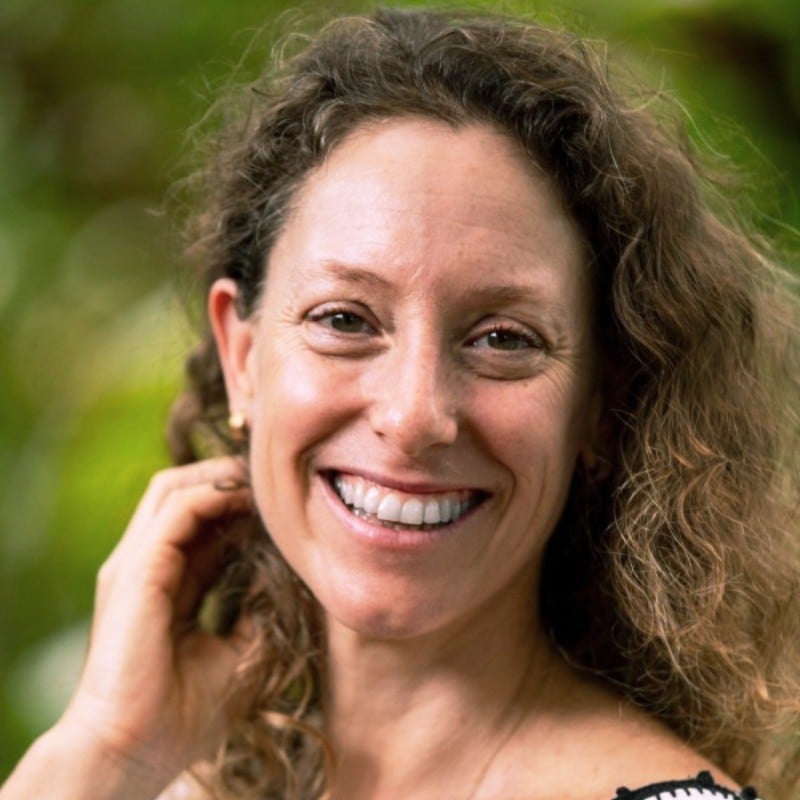
Na'ama Moran
Co-founded Cheetah and grew it to $150M in revenue. Serial founder, mentor at StartX and Alchemist.

Vincent Matranga
Co-founded Cheetah and scaled it to 350+ people. Lean operator trained in the Toyota Production System.
Before you apply
My side hustle barely makes money. Is it too early?
No. The program is built for the stage before product-market fit. You do not need revenue or a finished product. You need something you are serious about and the willingness to talk to customers every week.
I was just laid off. Should I do this now?
If you are weighing a business against another job, the 12 weeks give you evidence for that decision. Many people run the program while they interview, because the answer can be go, pivot or stop, and all three are useful.
What if the answer is no?
Then you found out in 12 weeks and at a fixed cost, instead of after burning your savings. Every experiment has a pass line and a drop-dead date, so a no is a clear result, not a vague disappointment.
How much time does it take each week?
Two touchpoints a week: one group session and one private hour with a founder coach. Between sessions you run experiments and talk to customers, so expect real work outside the calls.
What does it cost, and when does it start?
$3,000 for the full 12-week program. The first cohort starts in mid-November 2026. Seats are limited and filled by a short application and a conversation.
Stop wondering whether your side hustle could be a business. Find out.
Five to seven founders. The first cohort starts mid-November 2026.